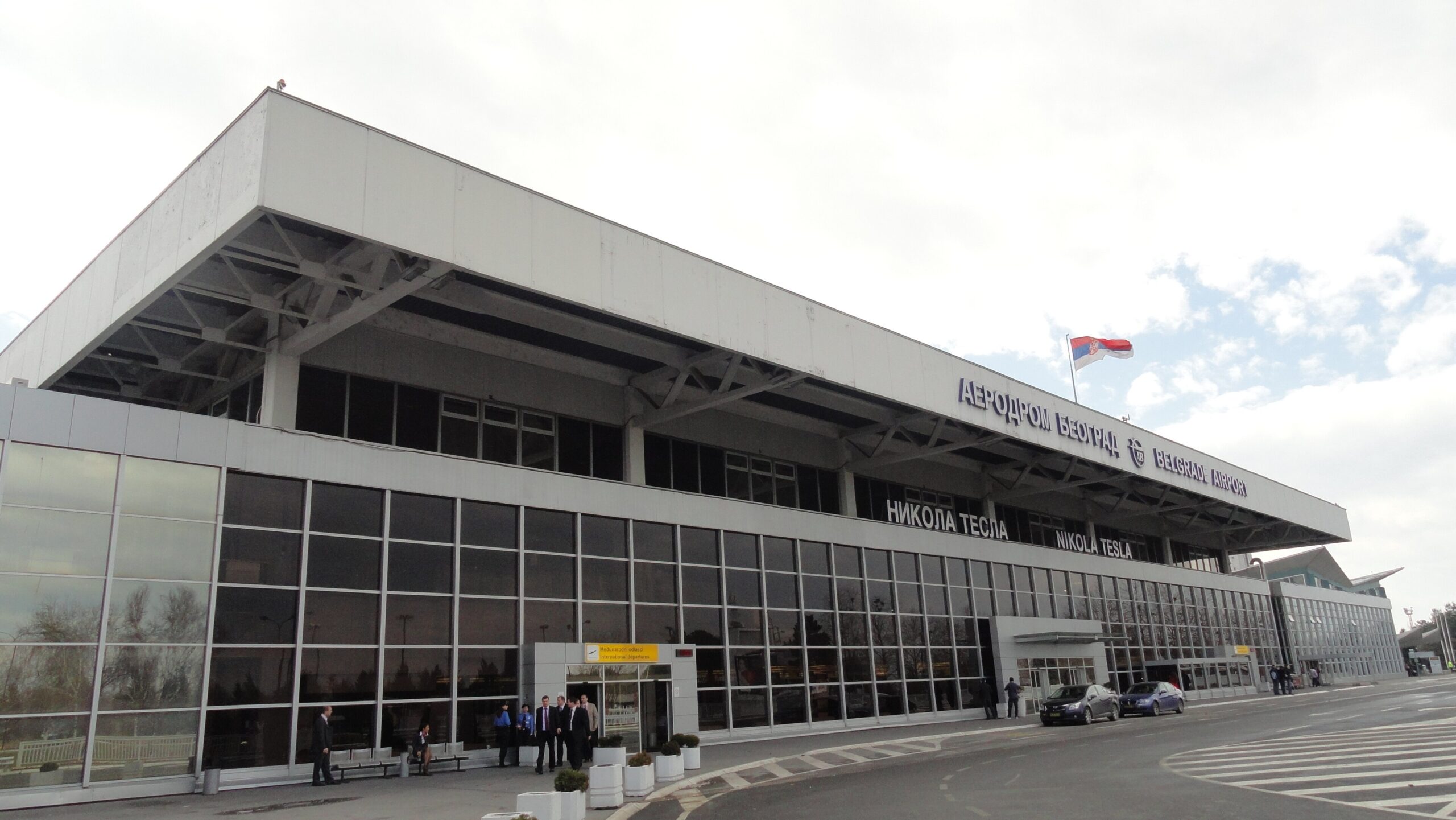
Waiting between flights does not have to be boring. Belgrade and its surroundings hide many worthwhile sights – from ancient fortresses to lively kafanas and untouched forests.
How to get from the airport to the city
Nikola Tesla Airport is located in the municipality of Surčin, around 18 kilometers west of central Belgrade. Whether you have an hour or a full day of free time, the connection to the city is relatively simple and offers several options for different budgets and preferences.
| Transport | Details | Price (approx.) |
|---|---|---|
| A1 bus | To Republic Square, every 20-30 min | ~170 RSD |
| Taxi / Bolt | Ride-share or Pink Taxi | 1,500-2,000 RSD |
| Car rental | Several agencies in the terminal | from 3,000 RSD/day |
| Private transfer | Book online in advance | from 2,500 RSD |
Note: Drivers from certain countries, such as the United States, may need an international driver’s license to rent a car. If you plan to take a short trip between flights, allow at least 3 hours before your flight. Heavy traffic may occur on the Ibar Highway during morning and afternoon rush hours.
Belgrade: the city that never sleeps
Belgrade is the first and most logical destination for travelers with a few free hours. The Serbian capital is one of the most dynamic cities in southeastern Europe, known for its rich history, vibrant nightlife, and warm Mediterranean spirit that does not fade even in winter.
Kalemegdan and Belgrade Fortress
~22 km 35 min drive History
At the confluence of the Sava and Danube rivers, on a site once inhabited by Celts, Romans, and Byzantines, rises Belgrade Fortress – one of the most impressive fortifications in the Balkans. The complex includes the Roman Well, the Military Museum, and parks offering panoramic views of the two rivers. Entry is free, and a walk along the walls takes about an hour.
Skadarlija
~20 km 30 min drive Culture and cuisine
Belgrade’s Montmartre – that is how this cobbled street in the old part of the city is often described, surrounded by kafanas serving traditional cuisine and playing folk music. At the turn of the 19th and 20th centuries, it was a gathering place for Belgrade’s bohemian crowd. A lunch of ćevapi, meze, and local wine accompanied by a tamburica ensemble is highly recommended.
Zemun
~10 km 15 min drive Old town
Zemun was once an Austro-Hungarian frontier town, and that past can still be clearly read in the architecture of its narrow streets and gated houses. The Danube promenade is full of fish restaurants, and the Gardoš Tower offers a breathtaking view. Zemun is closer to the airport than central Belgrade, which makes it ideal for a shorter stop.
Šumadija and nature nearby
For travelers who have a full day and want to step away from the city bustle, the area around the airport offers natural landscapes and villages that have preserved an authentic Serbian character. Within a one-hour drive, there are several worthwhile destinations.
Ada Ciganlija
~20 km 30 min drive Nature
The so-called “Belgrade Sea” – a river island on the Sava transformed into a lake nearly 4 kilometers long. In the warmer part of the year, the sandy shore is dominated by swimmers and athletes, while in winter a quiet walk by the water has a completely different, contemplative charm. Entry is free, and parking is available. An excellent option if you are waiting for a late evening flight.
Fruška Gora
~80 km ~1h drive Mountain and monasteries
The only mountain range in Vojvodina, covered with oak and beech forests, is home to sixteen Orthodox monasteries dating from the 15th to the 18th century. Wineries on the slopes offer tastings of local Fruška Gora wines. It is ideal for a day trip by car – from the airport to the first monastery, you can get there in less than an hour.
Practical notes for visitors
Serbia is outside the Schengen Area and the European Union, but visa-free entry is available to citizens of most European and many non-European countries. The currency is the Serbian dinar, although euros are often accepted in tourist establishments – usually at a somewhat less favorable exchange rate. Exchange offices are available both at the airport and in the city.
Serbian hospitality is not just a cliché – local residents like to help tourists, and most younger people in Belgrade understand English. For communication outside the capital, basic phrases in Serbian will be helpful and are appreciated by local hosts.